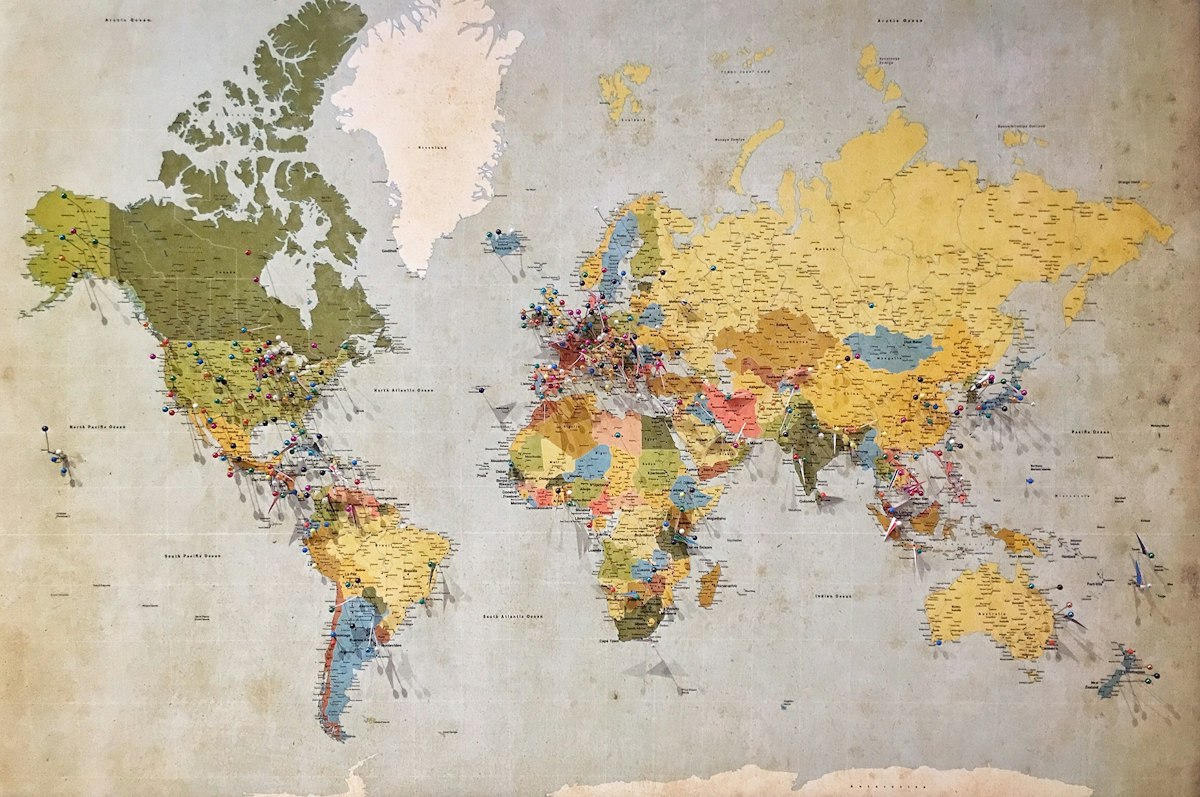
Every beautiful city map you create with our tool is powered by OpenStreetMap (OSM) - an amazing collaborative project often called the "Wikipedia of maps." But what exactly is OpenStreetMap, and why is it so special?
What is OpenStreetMap?
OpenStreetMap is a free, editable map of the entire world, created and maintained by volunteers. Started in 2004, it now has over 10 million registered users who have mapped billions of roads, buildings, and other features across the globe.
Key Principles
- Open Data: Anyone can use, edit, and share the data
- Free: No licensing fees or usage restrictions
- Collaborative: Built by volunteers worldwide
- Comprehensive: Often more detailed than commercial maps
- Up-to-date: Changes appear within minutes
How OpenStreetMap Works
Data Collection
OSM contributors gather map data through various methods:
- GPS Traces: Recording routes while walking, cycling, or driving
- Aerial Imagery: Tracing from satellite photos
- Field Surveys: Walking around and recording information
- Imports: Adding publicly available government data
- Local Knowledge: Adding details only locals would know
The Mapping Process
- Survey: Contributor goes out and records data
- Upload: GPS traces and notes are uploaded to OSM
- Edit: Contributor traces roads and adds information using OSM editors
- Tag: Features are tagged with details (road type, name, etc.)
- Review: Other community members can verify and improve the data
- Publish: Changes appear on the map almost immediately
Quality Control
OSM maintains quality through:
- Multiple contributors cross-checking each other's work
- Automated tools detecting errors and inconsistencies
- Community guidelines and best practices
- Local knowledge ensuring accuracy
- Ability to revert problematic changes
Why OSM is Perfect for City Maps
Comprehensive Road Data
OSM often includes roads that commercial map providers miss:
- Small residential streets
- Pedestrian paths and alleys
- Private roads
- Rural lanes
- Historical routes
Regular Updates
Unlike traditional map data that updates annually, OSM changes appear within minutes. New roads, changed layouts, and corrections are immediately reflected.
Global Coverage
OSM has impressive coverage worldwide, from major cities to remote villages. You can create a map of practically any place on Earth.
Detailed Classification
Roads are tagged with extensive information:
- Road type (motorway, primary, residential, etc.)
- Surface material
- Speed limits
- One-way restrictions
- Historical significance
The OSM Community
Who Contributes?
- Hobbyist Mappers: People passionate about cartography
- Local Residents: Mapping their own neighborhoods
- Humanitarian Groups: Mapping crisis areas
- Developers: Improving data for their applications
- Companies: Contributing data from their operations
- Government Agencies: Sharing public data
Humanitarian OpenStreetMap
OSM plays a crucial role in disaster response:
- Rapid mapping during earthquakes, floods, and other disasters
- Helping relief organizations navigate affected areas
- Identifying hospitals, shelters, and safe routes
- Volunteers worldwide can contribute remotely
OSM vs Commercial Maps
Advantages of OSM
- Free to use without restrictions or API limits
- More detailed in many areas, especially locally-mapped regions
- Transparent - you can see who added what and when
- Editable - you can correct errors yourself
- No vendor lock-in - data belongs to everyone
When Commercial Maps Excel
- Point-of-interest data (businesses, hours, reviews)
- Real-time traffic information
- Street View imagery
- Turn-by-turn navigation
- Consistent styling and UX
For pure road network visualization - which is what city map prints need - OSM is often superior.
How Our Tool Uses OSM Data
Data Extraction
When you search for a city:
- We query OSM's Nominatim service to find the city boundaries
- We download all road data within those boundaries
- We process and filter the data to extract road geometries
- We render the roads in your chosen colors
- You can export the result as PNG or SVG
What We Include
Our tool visualizes these OSM road types:
- Motorways and highways
- Primary and secondary roads
- Tertiary roads
- Residential streets
- Pedestrian paths (optional)
- Cycleways (optional)
What We Filter Out
To create clean, beautiful maps, we typically exclude:
- Building footprints
- Land use boundaries
- Waterways (though you can include them)
- Railways (optional)
- Administrative boundaries
Data Accuracy and Completeness
Highly Mapped Areas
Some cities have extraordinarily detailed OSM coverage:
- Major European cities (London, Paris, Berlin)
- US cities (New York, San Francisco, Portland)
- Developing world cities with active humanitarian mapping
- Areas with dedicated local mapping communities
Less Mapped Areas
Some regions have less complete data:
- Remote rural areas
- Some developing countries
- Areas with restricted access
- Recently built developments
However, coverage is constantly improving as more people contribute.
The Legal Side: Open Database License
What You Can Do
OSM data is licensed under the Open Database License (ODbL):
- Use: Free for any purpose, including commercial
- Share: Copy and distribute the data
- Adapt: Modify and build upon the data
- Keep Open: Derived works must also be open
Attribution Requirement
You must credit OpenStreetMap contributors:
"© OpenStreetMap contributors"
Our prints include this attribution automatically.
Contributing to OpenStreetMap
Why Contribute?
- Improve map data for everyone
- Map your local area better than anyone else could
- Join a global community
- Help humanitarian efforts
- It's surprisingly fun and addictive!
How to Get Started
- Create a free account at openstreetmap.org
- Complete the walkthrough tutorial
- Start with simple edits in your neighborhood
- Use the iD editor (web) or JOSM (desktop) for more advanced editing
- Join local mapping groups for support
Easy First Contributions
- Add missing street names in your area
- Mark one-way streets
- Add pedestrian crossings
- Trace missing residential streets
- Update speed limits
The Future of OpenStreetMap
Growing Applications
OSM powers an increasing number of services:
- Delivery and logistics apps
- Tourism and travel apps
- Urban planning tools
- Emergency services
- Autonomous vehicle research
- Beautiful map prints!
Technological Improvements
- AI-assisted mapping (but human-verified)
- Better mobile editing tools
- Improved imagery and data sources
- More sophisticated quality control
- Enhanced 3D capabilities
"OpenStreetMap proves that when people collaborate freely, they can create something better than any single company could build alone."
Supporting OpenStreetMap
Financial Support
The OpenStreetMap Foundation accepts donations to maintain servers and support the community:
- Join as a member
- Make a one-time donation
- Corporate sponsorship
Non-Financial Support
- Contribute mapping data
- Help with documentation
- Answer questions in forums
- Organize local mapping events
- Develop OSM-based applications
- Spread awareness
Fun OSM Facts
- Over 10 million registered users
- More than 750 million GPS points uploaded
- Over 8 billion nodes (data points) in the database
- Available in over 100 languages
- Edits made every second, 24/7
- Used by major companies like Apple, Microsoft, and Facebook
Learn More
Want to dive deeper into OpenStreetMap?
- Website: openstreetmap.org
- Wiki: wiki.openstreetmap.org
- Forum: forum.openstreetmap.org
- Blog: blog.openstreetmap.org
- Community: Find local groups and mapping parties
Thank You, OSM Community!
Every time you create a city map with our tool, you're benefiting from the work of thousands of volunteers who have spent countless hours mapping the world. We're grateful to be part of this amazing open-source ecosystem.
When you share your print, you're also spreading awareness of OpenStreetMap and contributing to its visibility and growth. Together, we're building the most detailed, free map of the world ever created.